In-House Trading and Rebalancing vs. Outsourced Trading: Which is right for you?

In the evolving landscape of wealth management, the “how” of portfolio execution is becoming just as critical as the “what.” As an RIA grows, the friction between high-level strategy and daily administrative trading often creates a bottleneck that stifles scale.
This article explores the three primary paths for trading and rebalancing—doing it yourself, hiring in-house, or outsourcing—to help you determine which model aligns with your firm’s current lifecycle and future goals.
For many firm owners, trading is the heartbeat of the practice. It’s where the investment philosophy meets the client’s reality. However, as the industry shifts toward specialized managed services, the definition of “control” is being rewritten.
**The Case for the Hands-On Approach: In-House Trading
**
Managing trading in-house—whether by the lead advisor or a dedicated staff member—is often the default for firms at both ends of the spectrum: the lean startup and the massive enterprise.
Doing It Yourself: The Solo RIA & Startup Phase
When you are just starting out, cost efficiency is king. Most major custodians provide baseline rebalancing software that allows you to execute trades directly. For a solo advisor with a manageable number of households, the “sweat equity” of doing it yourself avoids third-party fees.
The Benefits:
- The Educational Curve: Actively managing trades provides a deep, granular understanding of market mechanics and portfolio behavior.
- The Hands-on Connection: There is a certain psychological value in telling a client, “I personally executed these trades for you this morning.”
The Issues:
- The Growth Ceiling: Spending 40+ hours a month on back-office execution creates a massive opportunity cost, pulling focus away from business development and client relationships.
- The Personal Cost: Because these duties are time-sensitive, advisors often deprioritize personal time, family, and leisure to keep up with portfolio demands.
- Scalability: Furthermore, basic custodial tools often fail to “household” accounts effectively, making scalability a nightmare as complexity grows.
The Internal Desk
While often associated with large firms, internal trading is increasingly a path for growing RIAs who want a dedicated hand on the tiller. Whether it is a single specialized hire or a full team of traders, bringing this function in-house represents a commitment to total control.
The Benefits:
- Absolute Execution Control: Direct oversight of every execution parameter, from granular tax-loss harvesting thresholds to specific block-trading venues.
- Institutional Intimacy: Internal traders are often deeply integrated into the firm’s culture, attending client or investment committee meetings. This gives them a nuanced understanding of the “why” behind every trade that an outsourced partner might miss.
- Operational Versatility: Because trading volume can fluctuate, an in-house hire often serves as a “utility player.” Once the day’s trades are executed, they can pivot to operations, data reconciliation, or tech integrations, maximizing their value.
- Immediate Feedback Loops: Proximity allows for faster communication on urgent requests or market shifts.
The Issues:
This control comes with a heavy “People Conundrum.” As of 2026, the average salary for a seasoned investment trader ranges from $105,000 to $150,000, not including benefits, payroll taxes, and specialized software (which can run $20k–$100k annually).
- The Turnover Scramble: Trading is a high-turnover role. When a trader leaves, a two-week notice is rarely sufficient to hire and train a replacement, leaving the firm in a desperate scramble to maintain continuity.
- The Training Burden: The advisor or owner must remain an expert in the “ins and outs” of the trading software. If a staff member leaves, the responsibility of training the new hire falls squarely on leadership, consuming valuable growth time.
- Competing Priorities: While being a “utility player” is a benefit, it also creates risk. If an unanticipated high-volume trading day overlaps with other critical operational tasks, the trader is pulled in different directions, and something essential may be neglected.
- The Experience Gap: Entry-level hires often lack the “seasoning” to manage portfolios holistically, while senior traders provide immediate value but at a significant premium.
- The Coverage Risk: Hiring a single trader creates a “single point of failure.” When that employee is sick or on vacation, the advisor is forced back into the trading seat, neutralizing the original reason for the hire.
Trading Software for RIAs: Navigating the Advisor Tech Stack in 2026
If you stay in-house, your success depends on your tech stack. This usually starts with basic spreadsheets for tracking and modeling. As you grow, you’ll likely graduate to advanced platforms like Orion, Tamarac, Black Diamond, or Addepar. These tools are powerful and come with several pros/cons:
The Benefits:
- Deep Integration: These systems can offer a “single pane of glass,” connecting your trading, billing, and reporting in one unified ecosystem.
- Customization: They may provide granular control over complex householding, tax-loss harvesting, and custom asset allocation.
Client Experience: High-end tech stacks often include sleek client portals that can enhance the client experience.
The Issues:
- Cost: Trading and rebalancing software can cost between $20k and $100k+ annually, depending on firm size and licensing needs.
The Implementation Gap: Setting up a new trading system is a grueling process that often takes 4–8 months before the first trade is even placed. - The Learning Curve: Mastering complex software takes months of training, diverting your staff’s attention from high-value tasks.
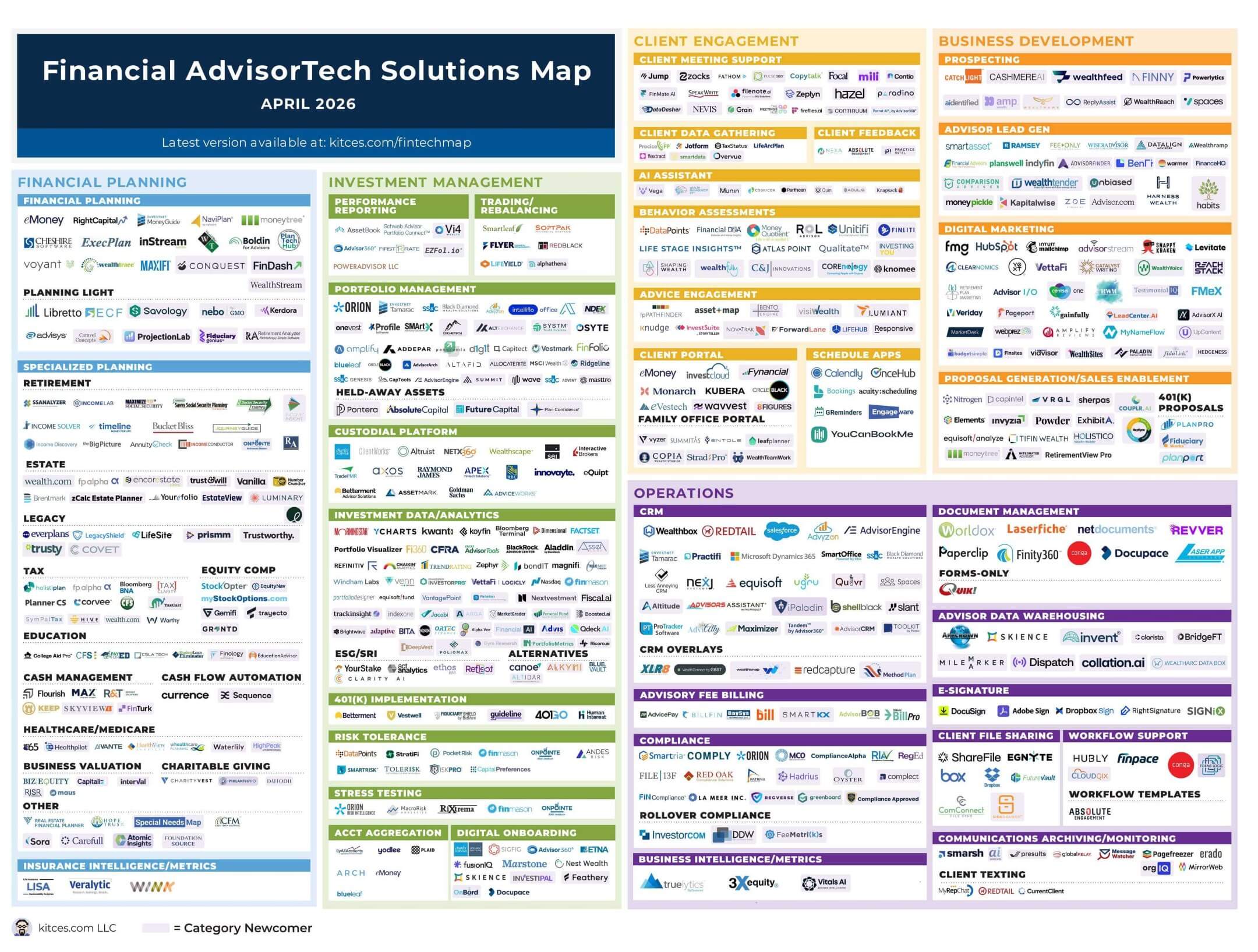
For a deep dive into the best practices and latest options, Michael Kitces’ annual Financial AdvisorTech Solutions Map is the industry gold standard for navigating these choices.
The $12.7 Trillion Shift: TAMPs and SMAs
To understand the current trading landscape, we have to look at the explosive rise of Turnkey Asset Management Platforms (TAMPs) and Separately Managed Accounts (SMAs). What was once a niche corner of the industry has become a core standard for modern wealth management.
Analyzing the High Cost of TAMP Fees vs. Strategic Flexibility
The numbers tell a compelling story of an industry reaching a tipping point:
- Massive AUM Surge: In 2009, TAMPs held roughly $586 billion AUM. By late 2020, that figure hit the trillions (The Wealth Advisor). Today, the total Wealth Management Platform market has soared to over $12.7 trillion in Assets Under Administration (AUA)—a staggering 325% growth in platform assets since 2019 alone.
- Adoption as the New Normal: A decade ago, only about 10% of advisors utilized a TAMP. By 2025, that adoption rate has surged to 54% (Kitces).
- A Move Toward Capacity: This growth is driven by a fundamental shift: advisors are moving away from transactional models toward comprehensive wealth planning. To gain the capacity for deep client relationships, they are outsourcing the back-office, trading, and rebalancing functions.
TAMPs play a very important role for firms seeking to outsource all aspects of their operation and back office. But they do not fit every firm, especially advisors that want to retain autonomy in certain areas, especially with investment philosophy and intellectual property of investment design.
- Cost: A traditional TAMP typically charges between 20 and 40 basis points. Furthermore, many platforms are owned by asset managers who naturally weave their own proprietary funds into the models. This creates a potential conflict of interest that can be difficult to justify to savvy clients.
- Loss of Control: You are often handing over the investment research and selection to them. If the TAMP is owned by an asset manager, they may weave their own high-margin products into your models.
- Inflexibility: TAMPs often struggle with “legacy positions”—those low-basis stocks a client has held for 20 years that you can’t just liquidate without a massive tax hit.
The Outsourced Trading Advantage: Efficiency and Scale
In the traditional RIA model, trading is often viewed as a necessary administrative burden—a task that must be squeezed in between client meetings and financial planning sessions. However, the industry is shifting toward a more specialized approach. Outsourced trading is increasingly seen as the “middle way” for firms that have outgrown manual rebalancing but aren’t ready (or willing) to surrender their investment discretion to a TAMP.
By partnering with Advisor Logistics, you decouple the “thinking” from the “doing.” You remain the Chief Investment Officer (CIO), while we act as your dedicated, institutional-grade trade desk.
How the Partnership Works: The “Virtual Trade Desk”
Think of an outsourced trading partner as a seamless extension of your firm. You remain the Chief Investment Officer (CIO), setting the models, the weightings, and the tactical shifts. Once your strategy is set, you delegate the technical “button pushing”—the complex buys, sells, and household-level rebalances—to a professional desk.
Key Benefits of Outsourcing to Advisor Logistics
Precise Implementation: Your portfolio administration is handled by specialists with the advanced tools and technology required for operational accuracy.
Time & Focus Optimization: The “Time Conundrum” is the biggest silent killer of RIA growth. By offloading hours each month of complex administrative trading tasks, you free yourself to focus on high-level strategic planning, research, and revenue-generating decisions.
Enhanced Risk Management & Compliance: We provide a “second set of eyes” on every trade. By utilizing our specialized infrastructure for trade settlement and daily reconciliation, you mitigate the risk of manual “fat-finger” errors and ensure robust regulatory oversight.
Institutional-Grade Expertise: You gain specialized knowledge across different asset classes and global markets without having to be an expert in every niche yourself. Whether it’s handling Direct Indexing or Custom Portfolio Overlay Management, our team has the depth to support your most complex strategies.
We can also provide consulting on your tech stack, portfolio management best practices, and outsourced partnership opportunities, and more.
Uninterrupted Coverage: We provide continuous capabilities, every trade-eligible day of the year. You never have to worry about PTO or gaps in service.
Superior Economics: Our pricing starts at just 5 bps (scaling down as AUM increases). You get an entire institutional trade desk for the cost of 1-3 mid-level employees.
No Repapering Required: We work with your current custodian. There is no additional paperwork for your clients to sign and no disruption to your existing workflow.
Empowering Your Team’s Growth: “Does your trader actually like trading?…” Many firms have a junior staffer handling trades who actually wants to be an advisor. We empower them to transition into client-facing roles, increasing their value to the firm. If your internal team would rather manage the strategy and research than the mechanical execution, we allow them to step up into investment management roles while we handle the “button pushing.”
A Partnership Culture: We prioritize white-glove support and relationship management. You aren’t just an account; you are supported by a single interface and in-house engineers who resolve technical issues in real-time.
Making the Right Call: A Decision Framework
Choosing the right path depends on your current pain points and priorities.
Feature
In-House (Self)
In-House (Hired)
TAMP / SMA
Outsourced Trading Desk i.e. Advisor Logistics
Control
Absolute
High
Low
High (Full Discretion)
Cost
Low (time cost high)
Very High ($125k+)
High (20–50 bps)
Fractional ~5 bps
Scalability
Poor
Moderate
High
Excellent
Software Cost
High (unless using custodian tech)
High ($20k+)
Included
Included
Choose In-House/Self-Directed Trading If…
- You have a simple portfolio structure with minimal maintenance.
- Your primary goal is absolute cost control at the expense of your own time.
- You genuinely enjoy the “micromanagement” of daily trades.
Choose Outsourced Trading If…
- Time is your bottleneck: You are losing out on new business because you’re buried in rebalancing tasks.
- Complexity has arrived: You are managing multiple custodians, households, and legacy positions that TAMPs won’t touch.
- You want to scale without the headcount: You need the power of an institutional desk without the $150k salary and the “People Conundrum.”
About Advisor Logistics: Your White-Glove RIA Back-Office Trading Partner
While many firms feel forced to choose between doing it in-house or handing everything over to a TAMP, Advisor Logistics offers an excellent third option for RIAs.
Founded by veterans of the RIA and rebalancing software space, we provide a cost-effective, institutional-level trade desk that acts as your back office. We implement your trading strategy, your way. By leveraging our own technology and decades of experience, we eliminate your software costs and the need for additional headcount, all while keeping you in the driver’s seat as the primary expert for your client’s investments.
Ready to reclaim hours of time every month? Contact Advisor Logistics today to see how our white-glove outsourced trading services can help you scale.